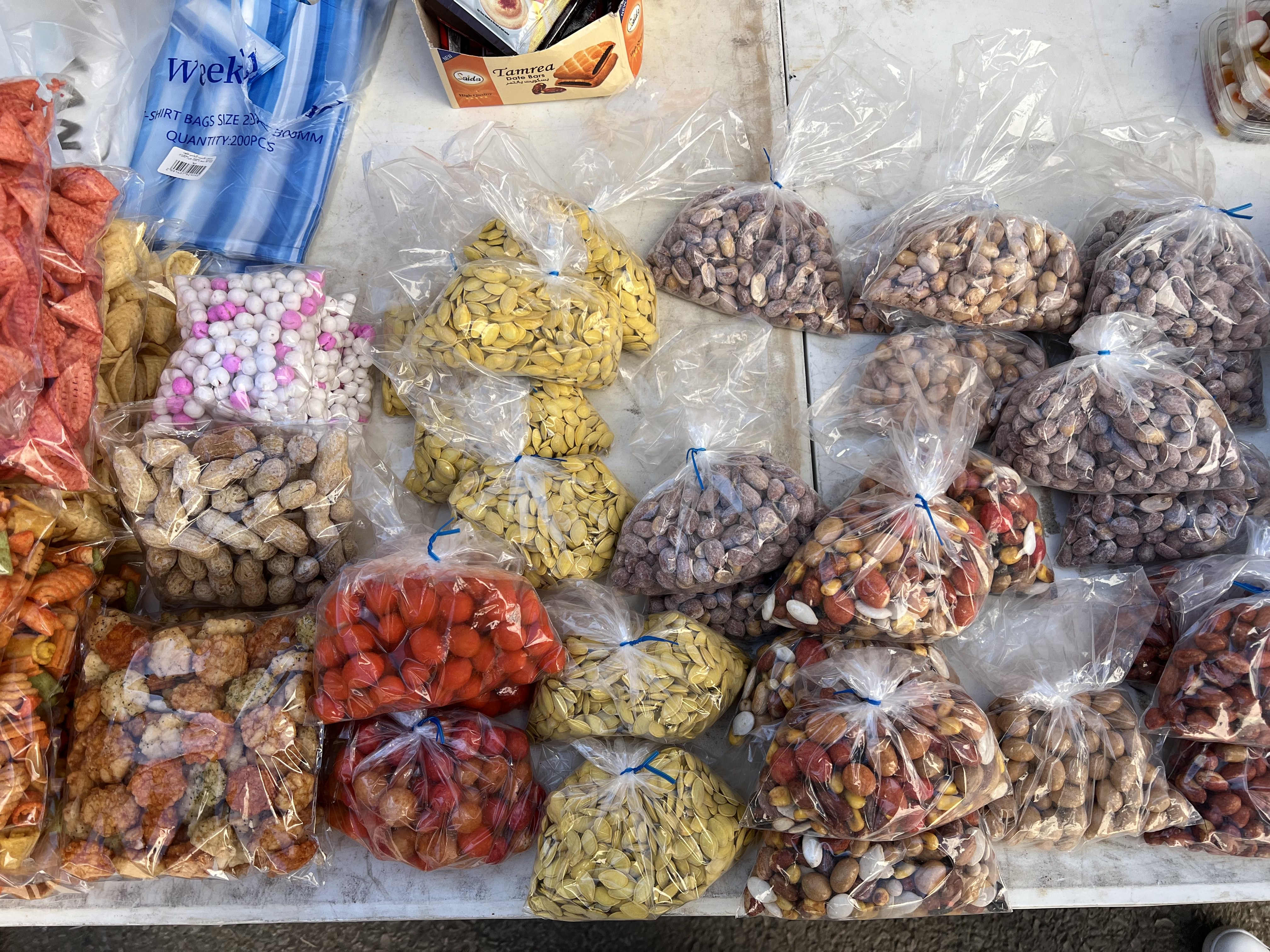
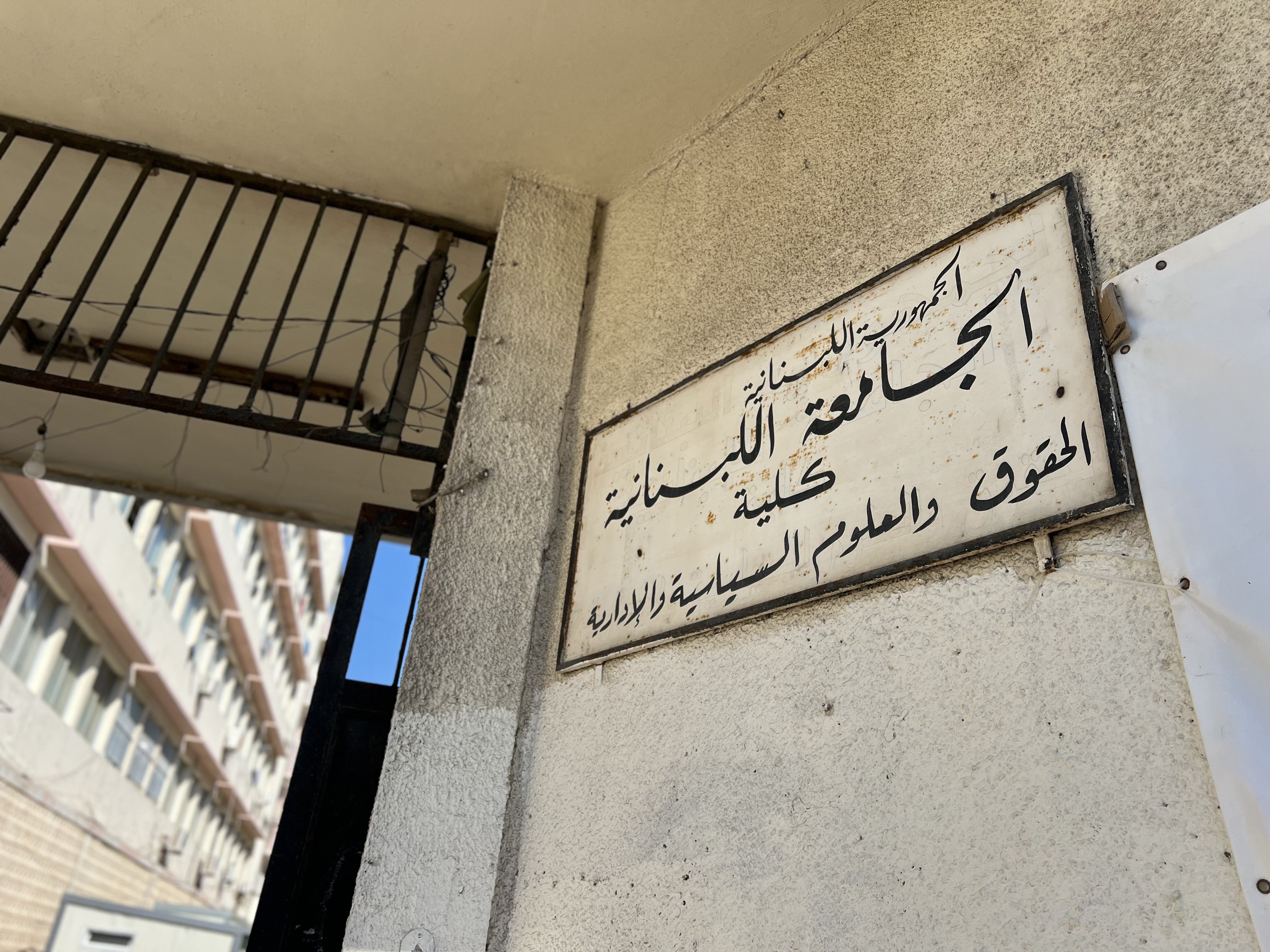
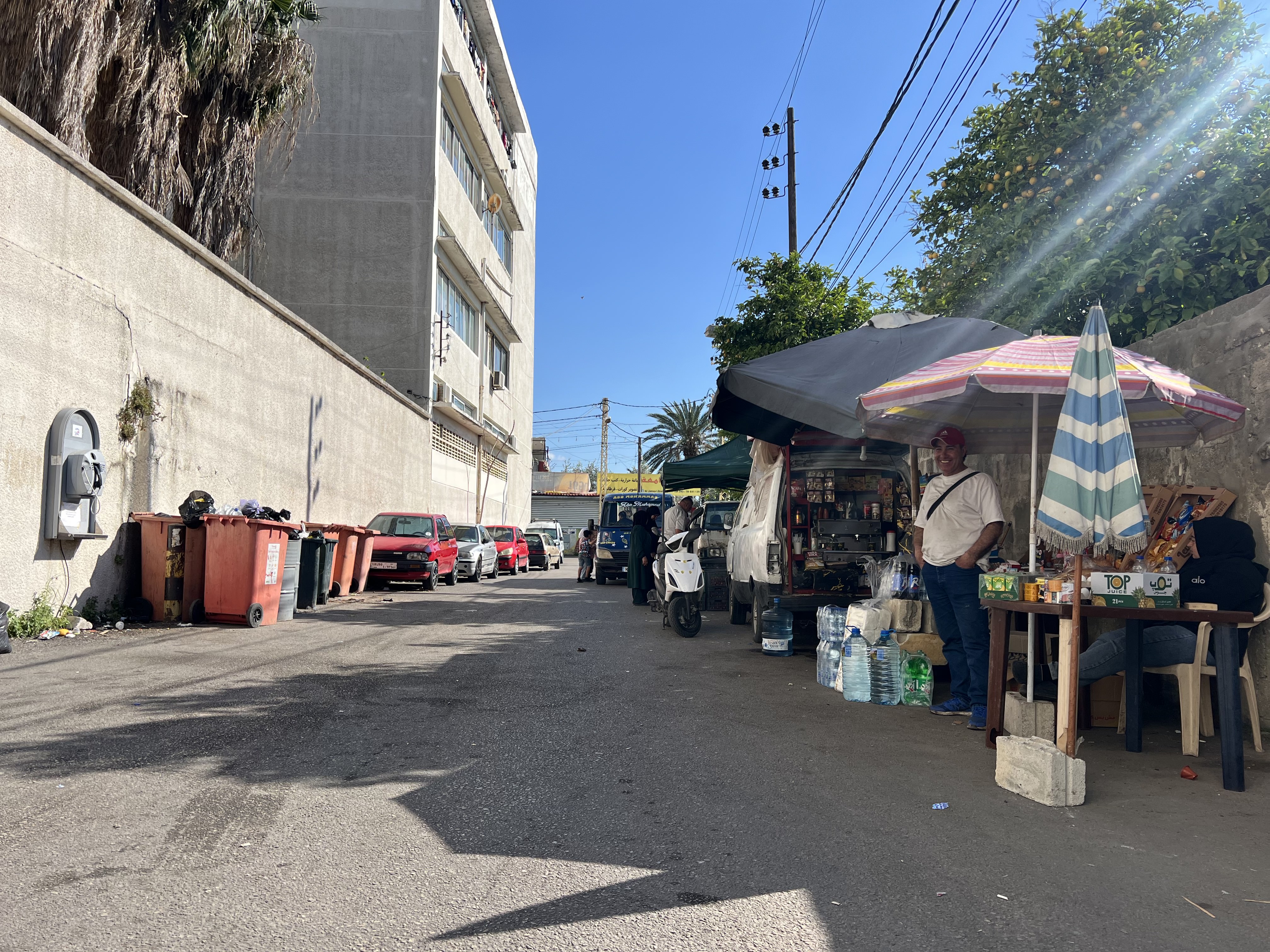
On the sidewalk facing the entrance of the Law College in Saida, Ahmad Diab stands behind his small stall. He carefully arranges bags of candy and mixed sweets, watching the flow of passersby. Every now and then, a child approaches, or someone stops for a quick purchase, while Ahmad remains standing guarding what is left of his day.
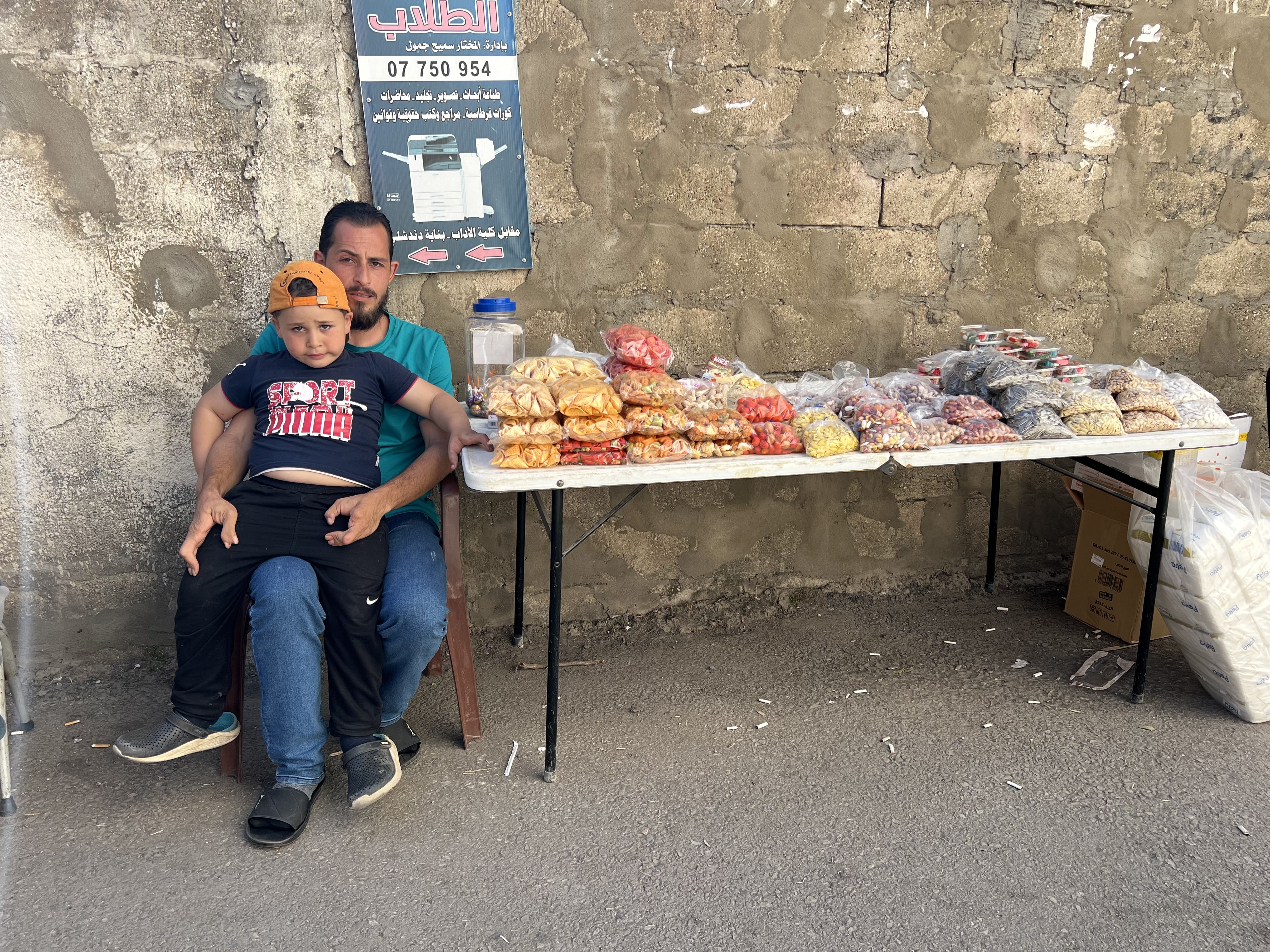
“This is not a job to get rich,” he says quietly, “but it covers the children’s expenses.” Ahmad, a father of three from Froun in Bint Jbeil, was forced to flee with his family on March 2. “We didn’t know where things were heading, but fear for the children was stronger than anything,” he recalls.
The journey to Saida took nearly twenty hours—a short distance turned into a long trip filled with waiting and anxiety. “We just wanted to arrive.” When they did, shelters were opened in universities, and he registered his family. At first, there was no space indoors, so they spent the first night in the car. Later, many families gathered in one room. “There were around sixty people… then we adapted, and became like one family.”
This was not his first displacement. During the 2024 war, he went through a similar experience in Tripoli, staying for over two months with extended family. But repetition does not make it easier—it only adds weight to memory.
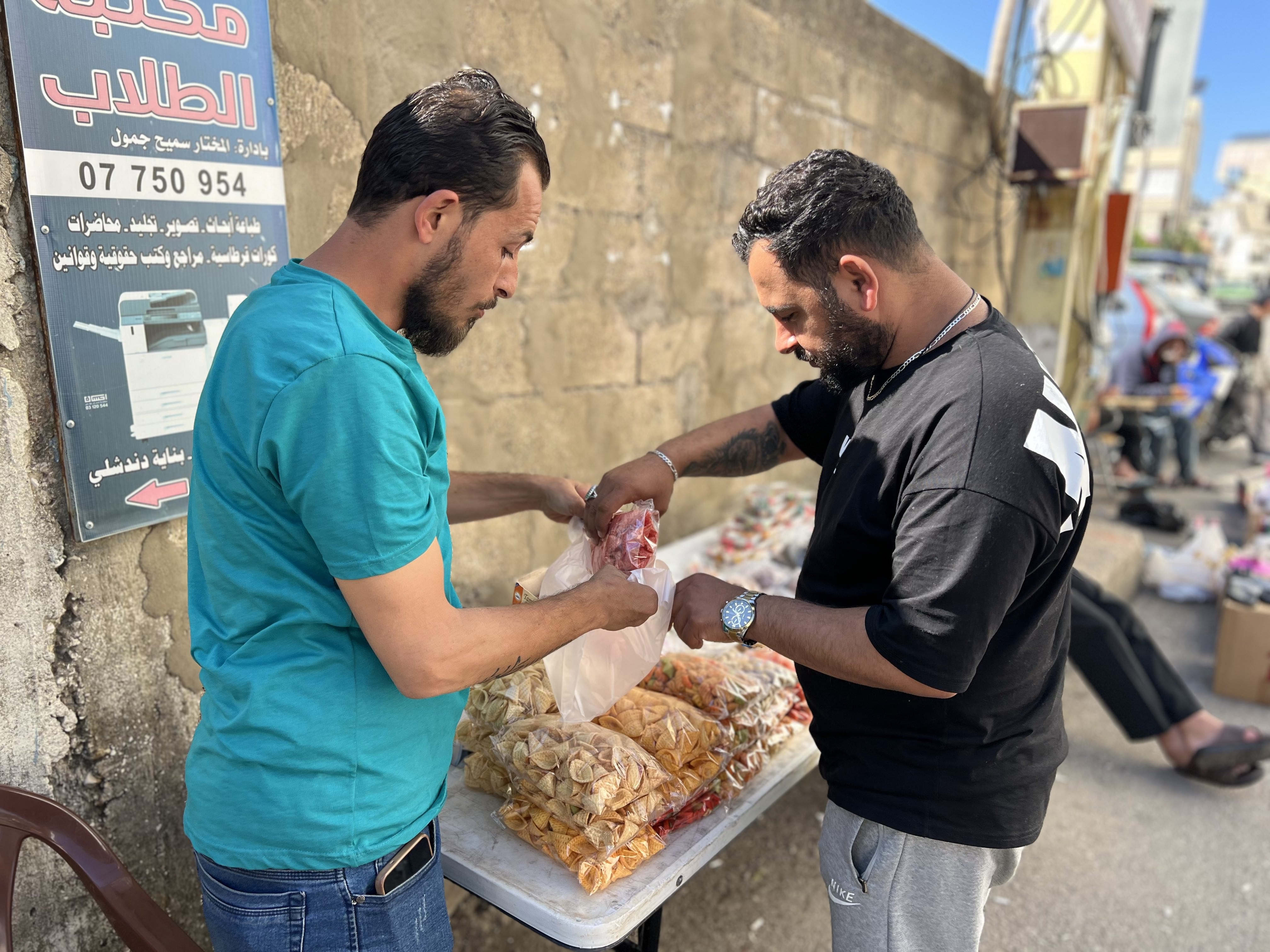
Before displacement, Ahmad worked in thrift. Now, after more than a month away from home, he decided to start over, even with limited means. A local vendor helped him secure goods at affordable prices, even allowing returns. “I sell at prices people can afford, because I know exactly what they’re going through.” Still, work remains difficult. “People have either spent everything or are in debt—some can’t even afford food.” Yet Ahmad tries to hold onto his humanity. Sometimes he gives a child candy for free. “He’s like my son… I can’t say no.”
For him, work is a way to cope. “I work so I don’t get stuck in anxiety,” he says. He misses home deeply—the people, the details of village life. “A cup of coffee under an olive tree was enough to make everything simple.” When he returned to check his house, he found it damaged, with roads nearly blocked.
Today, he chooses to stay in the shelter, where life—though difficult—is more stable. Close to work, able to provide the basics.