Known as Abu Imad Al-Souri (The Syrian) . Mouwafaq… , sixty-eight years old, originally from the city of Homs in Syria. Before the war changed his life, he was an employee at the Commercial Bank of Syria.
With the start of the war in Syria, he found himself facing a harsh reality and decided to travel to Egypt, hoping the journey would be temporary. He says,
“I thought it would be a month or two and then I’d go back… but the story dragged on.”
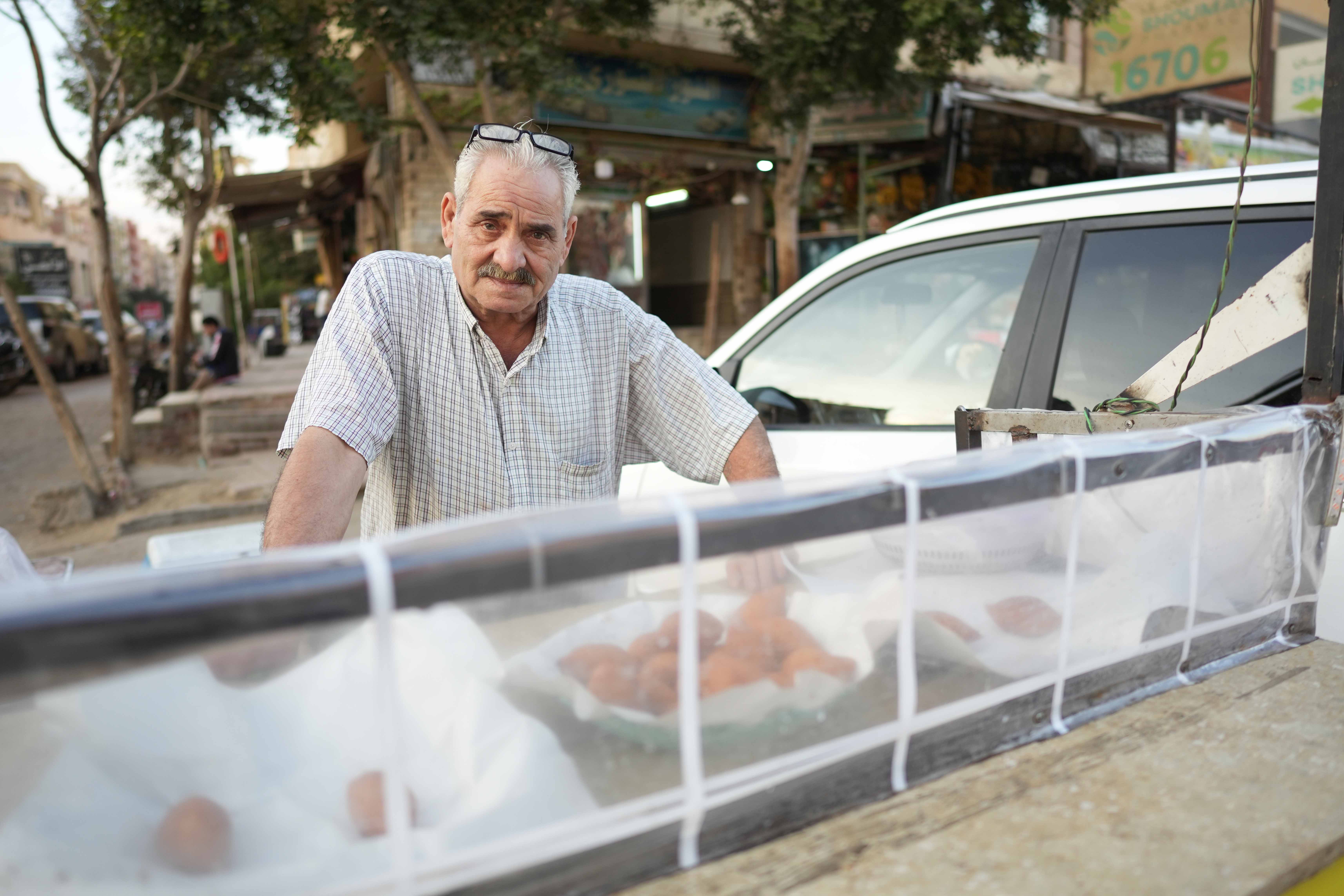
Days turned into four full years in Egypt without work. He had arrived with what he describes as “a decent amount of money,” but time slowly consumed it. As the money began to run out, he searched for work, but “Because of my age… I wasn’t getting any job.”
Despite this, he carried with him an old passion for cooking. He recalls:
“I love being in the kitchen and making food… I really love cooking. Especially kibbeh. I love it so much that I know how to make it perfectly—from the dough to the filling, to frying and grilling.”
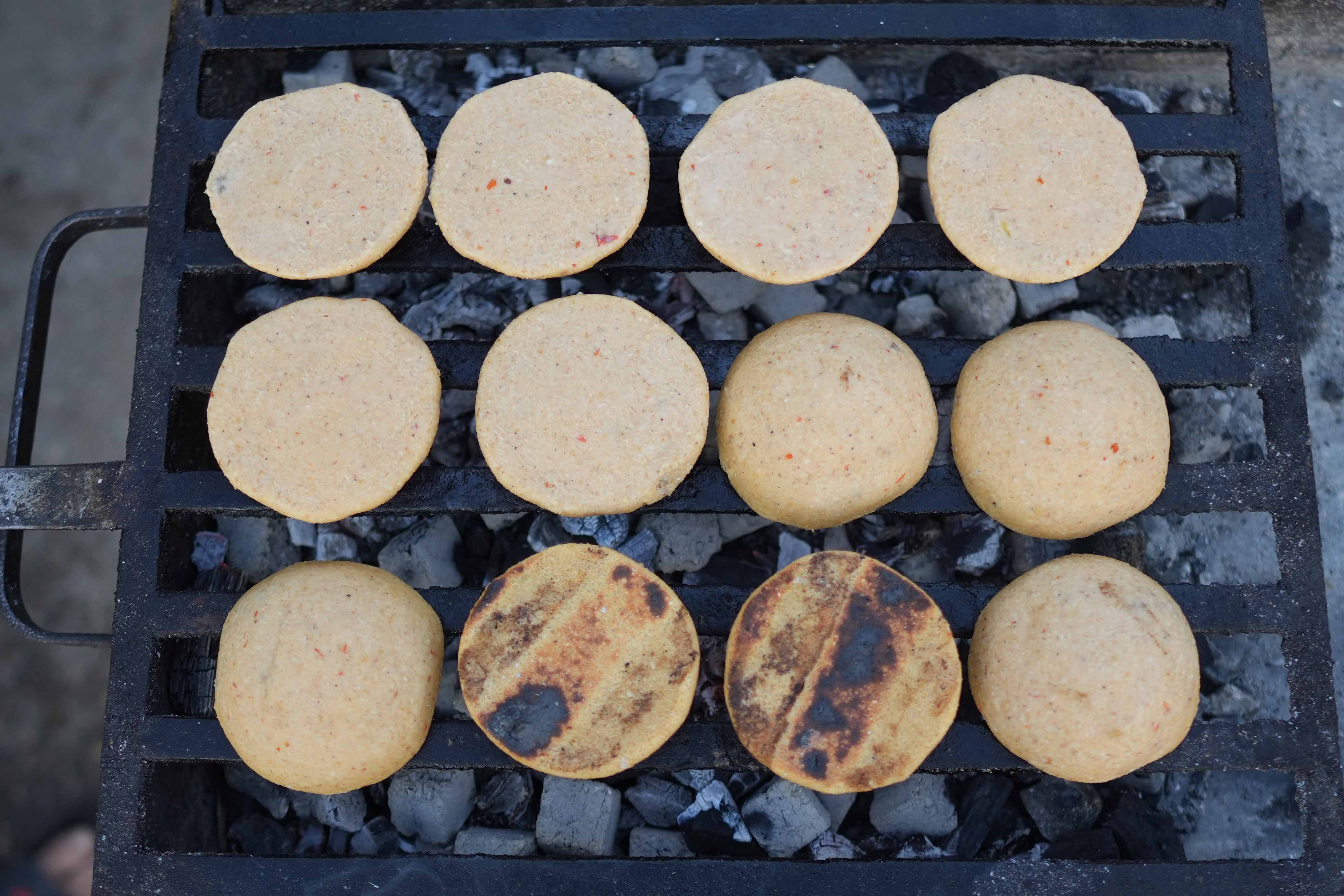
One day, he prepared a batch of kibbeh at home, but couldn’t find a suitable place to grill it inside the apartment. He carried the tray to a butcher to grill it there. While he was grilling, people began to ask him how much each piece cost. He says,
“They kept asking, ‘How much?’ and I’d say, ‘It’s not for sale, it’s for home.’ More than twenty people asked me! And every time someone asked, I’d give them one or two pieces for free.”
He returned home that day thinking about what had happened. The next day, he had a cart made, bought a grill, and began selling Syrian kibbeh in Egypt.
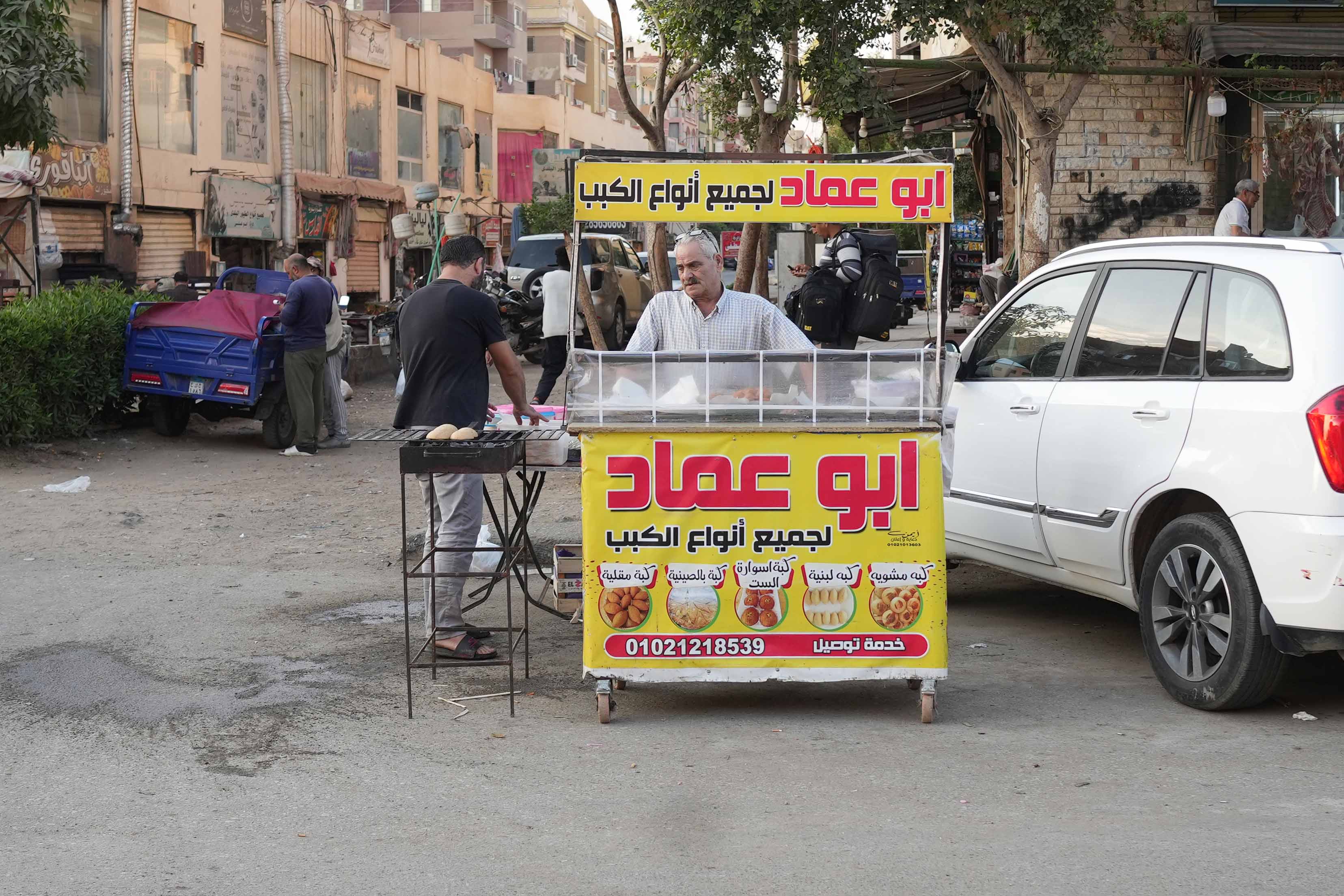
The beginning was not easy. He says,
“One day I’d sell half the quantity, another day a quarter. Whatever was left—because fresh kibbeh tastes best—I’d eat it at home or distribute it to neighbors or people passing by on the street. There were no profits… I stayed like that for more than five months.”
But with patience and persistence, everything changed. People began to recognize him and return after tasting what he made with his own hands. He says,
“From the day I started working, Egyptians ask me about it every day. Every time they taste it, they like it—and they come back to order again.”
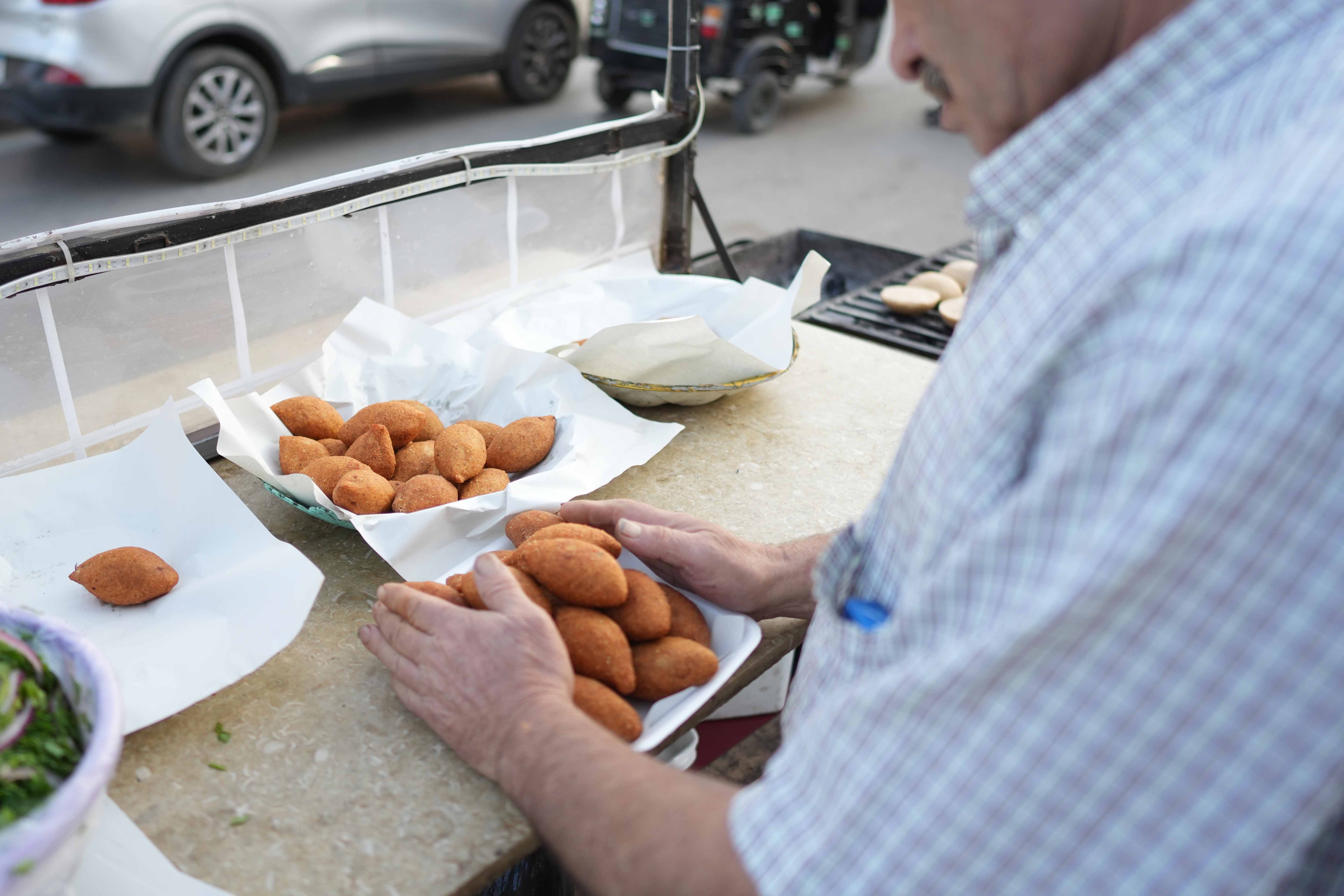
For Abu Imad, kibbeh holds a value far beyond being food; it connects him to his memories, his family, and his home in Syria. He says:
“Every time I make kibbeh, I remember my daughters and my grandchildren. I remember how they used to gather around me while I was grilling in Syria, how I fed them while I was happy. Their laughter made me feel like I owned the world.”
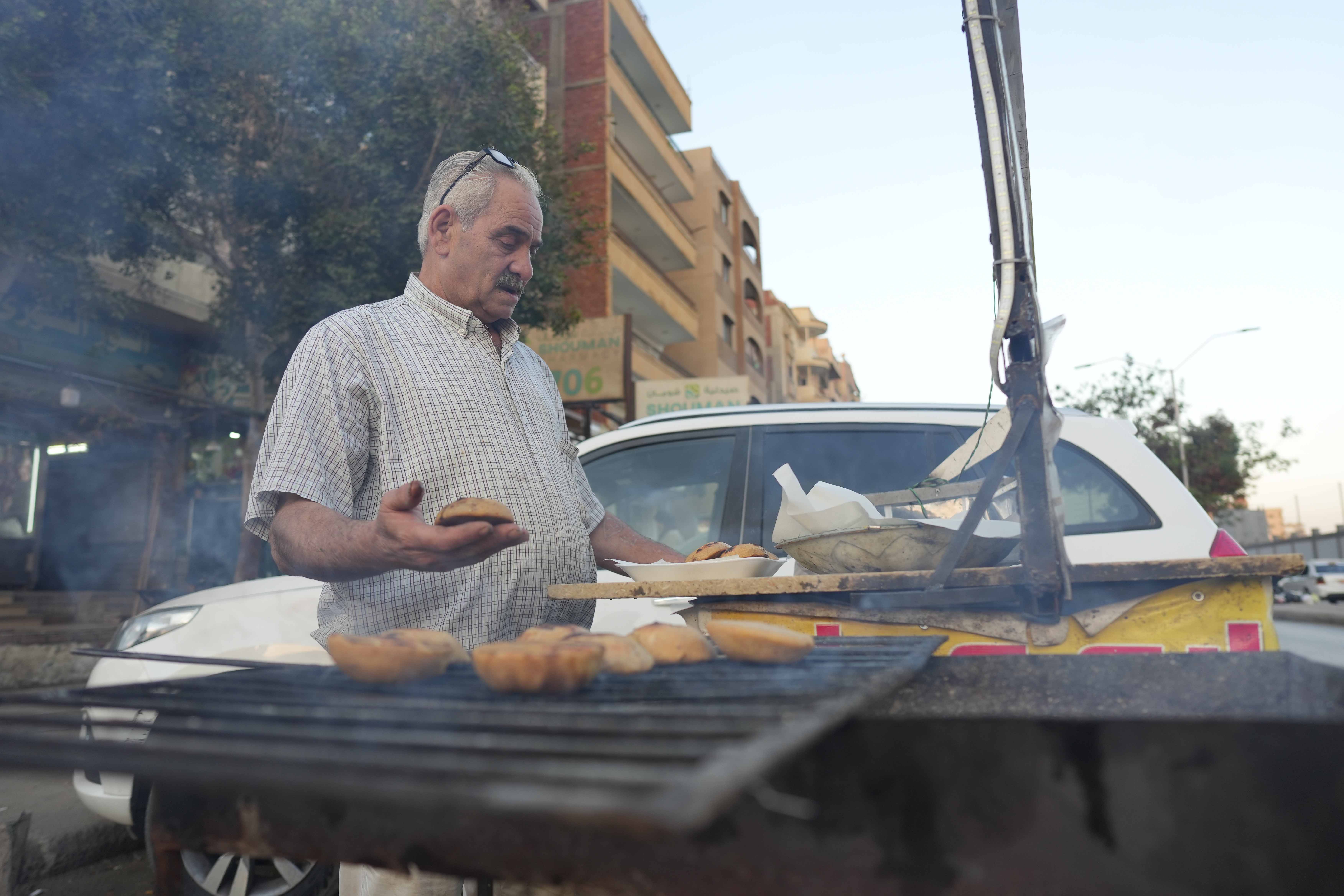
He concludes:
“Even if it’s a small project, don’t get bored. Don’t think about giving it up, even if it starts with losses. The most important thing is to love what you do. I chose kibbeh—not just because I like it, but because I adore it.”