From the beginning of summer until mid-autumn, women climb to the rooftops every day to prepare the mouneh (the preserved food supplies for winter in Baalbek). It is the most renowned city for mouneh making in Lebanon, because of its warm and dry climate. Women gather in courtyards or on rooftops, dividing the work among those who chop, mix, and fill jars. Their laughter and conversations fill the air, mingling with the scent of red pepper, kishk (fermented yogurt and cracked wheat), and freshly brewed coffee.


They begin work early in the morning and continue until evening. The bulgur is washed thoroughly, spread under the hot sun to dry, and turned regularly throughout the day to prevent clumping—while keeping pigeons away. After two days, the bulgur is brought down from the rooftop and mixed with yogurt to begin the next stage of preparation. The kishk takes about a full month to make before it’s ready to be stored as part of the winter provisions.

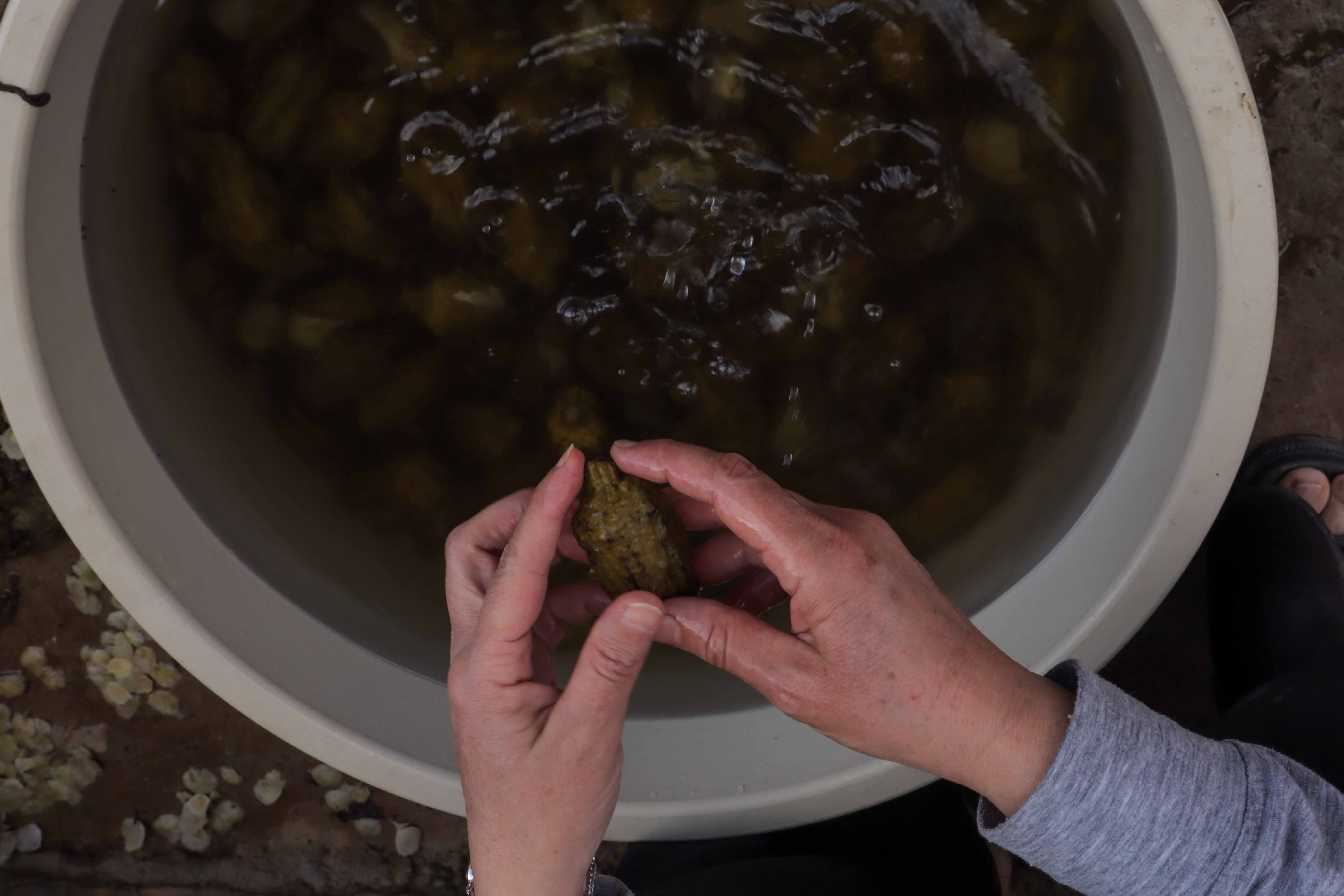
Mouneh forms the foundation of the diet in Baalbek and its surrounding villages. It mainly consists of kishk, makdous(stuffed eggplants), pickles, dried peppers, dried molokhia leaves, tomato paste, and other preserved foods that can be safely stored in the family’s dedicated pantry. Its importance lies in the fact that winters are harsh in this region—temperatures drop low, and heavy snow makes it difficult to move or leave the house.

In one of Baalbek’s villages lives Siham, a woman in her forties, who says:
“If guests come to visit us in the middle of winter, I don’t worry. I just go into the mouneh room and prepare a meal from what’s there.”
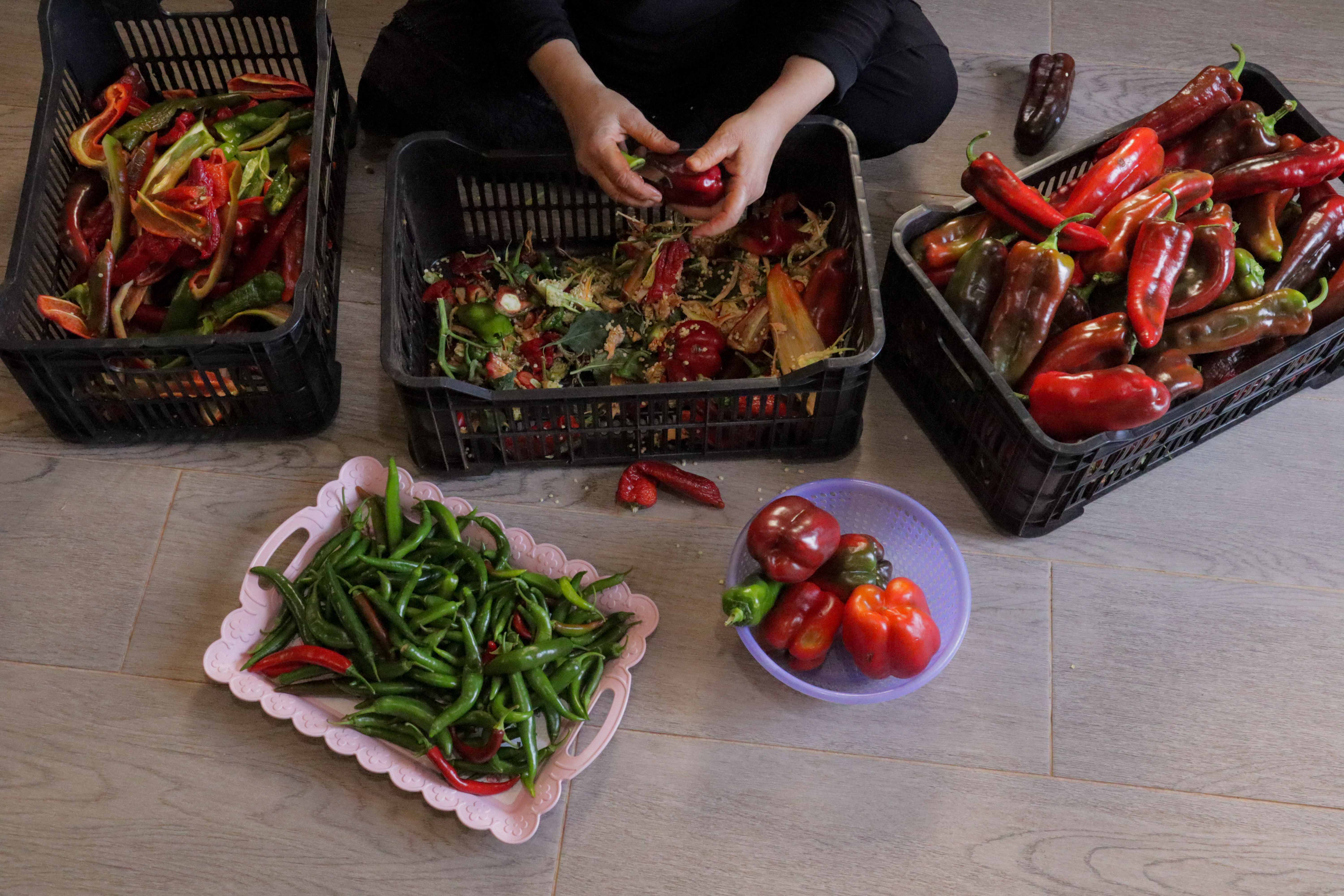
For generations, it has been the women who have preserved the flavors of the land—chopping, drying, and storing. But at its core, mouneh is the collective memory of women: their silent narrative of labor, care, and continuity. Each woman says, “I am here—this is my story,” through her own distinct flavor. Every one of them inherited her method from her mother, adding to it something of her own taste and experience. The flavor of Marwa’s makdous differs from Siham’s—Marwa adds plenty of chili, while Siham prefers the flavor of walnuts to stand out.
Siham says:
“Making mouneh takes a lot of time and effort, but we work together to finish faster—and to enjoy ourselves and spend time together.”
Despite the danger and Israeli aggression against Baalbek, Siham continued her work this year on the open rooftop of her home. The city was bombed during the recent war, forcing many of its residents to leave. Around then, the sound of shelling echoes, yet the women of Baalbek persist—filling jars and exchanging stories as they prepare their mouneh.