“I spent many years of my life in this profession, moving between cities and villages, until I came to know most places intimately—as if I were a tour guide who lived through the land and its people.”
— Hakam Ashour
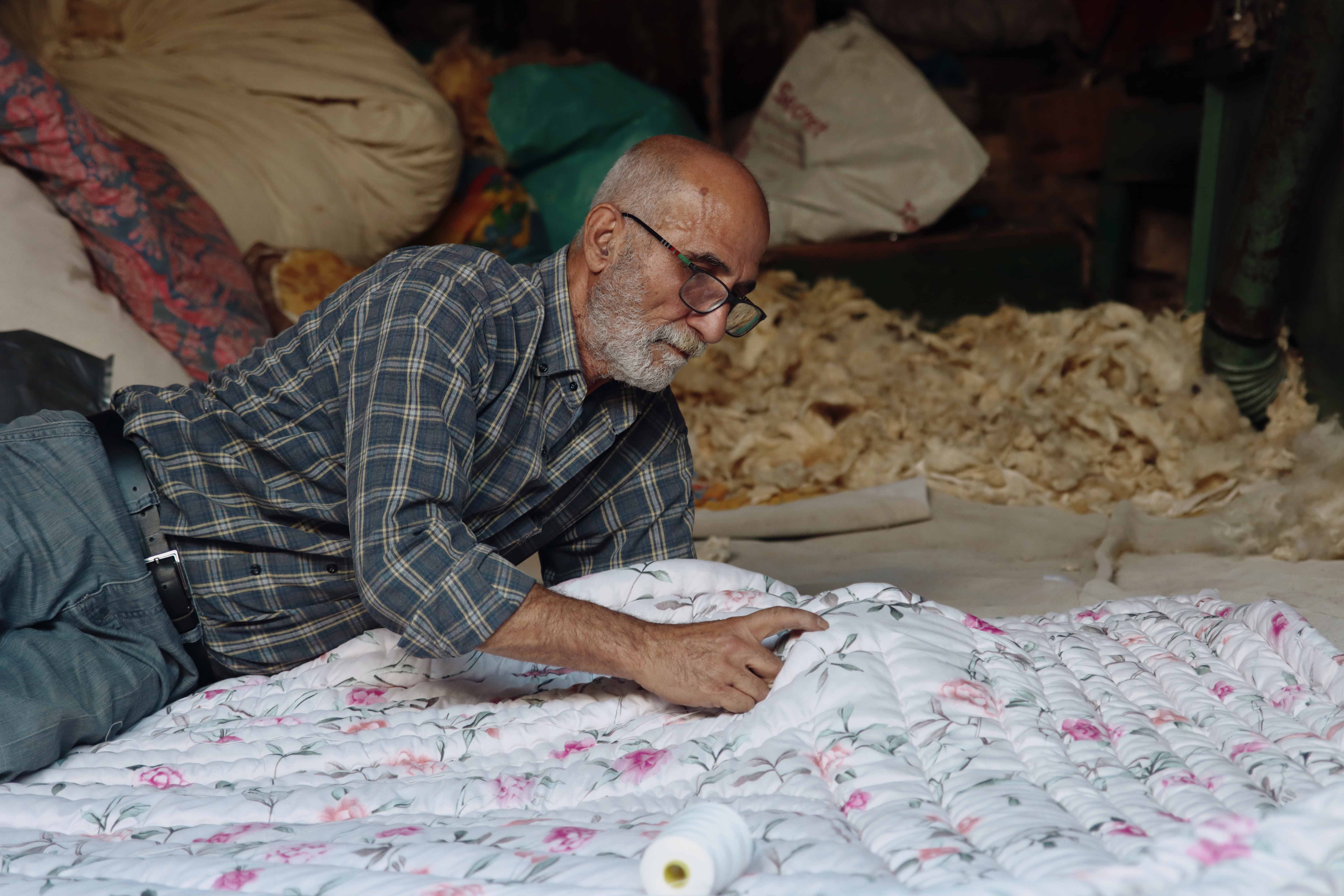
In the heart of the Old City of Nablus’, among alleyways that still carry the scent of old homes, Hakam Ashour sits stitching quilts. He is the last quilt-maker in Nablus, a craft whose roots date back to 1925, when the workshop was founded during the British Mandate. He began working there in 1968, and since then has devoted his life to the practice of quilt-making.

In his work, Hakam relies on natural materials: wool from sheep, and cotton grown in the plains of our land, such as the Besan Valley and Marj Ibn Amer. When it was available, he also used Syrian and Egyptian cotton—especially Egyptian cotton, known for its long fibers and high quality. Yet because of the changing economic and agricultural conditions have made access to these materials increasingly difficult, leaving their mark even on the smallest details of the craft.

Hakam does not only stuff the quilts; he adorns them with artistic motifs—peacocks and traditional ornamental patterns. For him, making a quilt is not a job, but an artwork woven with patience. Each quilt is a unique piece that machines can never replicate.

Despite the declining demand for handmade crafts today—due to their high cost and the time and labor they require compared to manufactured products—Hakam remains steadfast in his profession. Some customers still arrive carrying old quilts inherited from their mothers and grandmothers, asking for them to be renewed, as if seeking to revive a fragment of the memory of the old home.
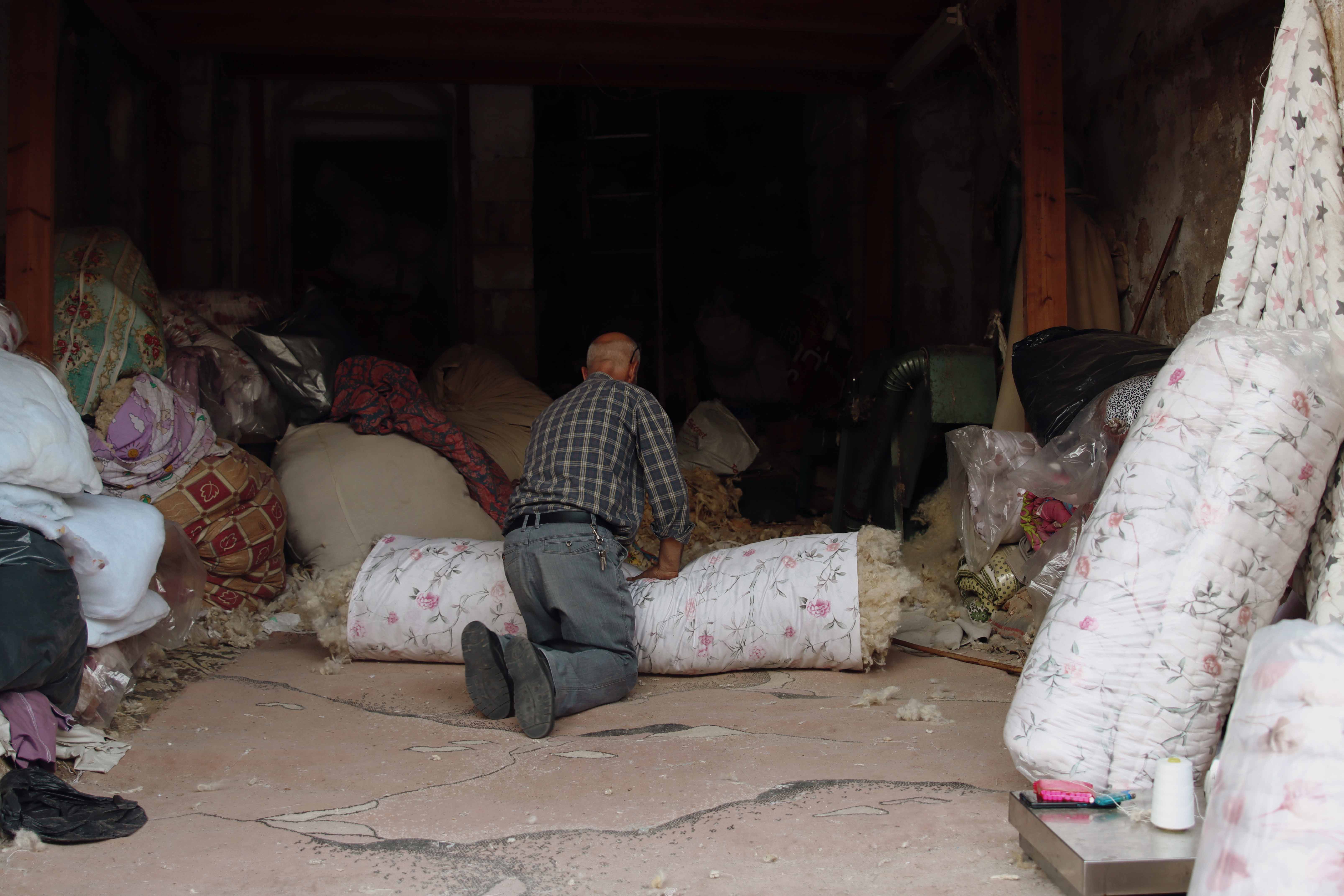
Huakam says: “Every time I work on such a quilt, I feel that I am not stitching cotton and wool alone, but sewing a thread that connects the past to the present. Some things, no matter how much time passes, remain sacred in our memory.”

Today, nothing remains in the quilt-makers’ market of Nablus but Hakam Ashour and his needle—the final witness to a craft that was once an essential part of everyday life in Palestine.