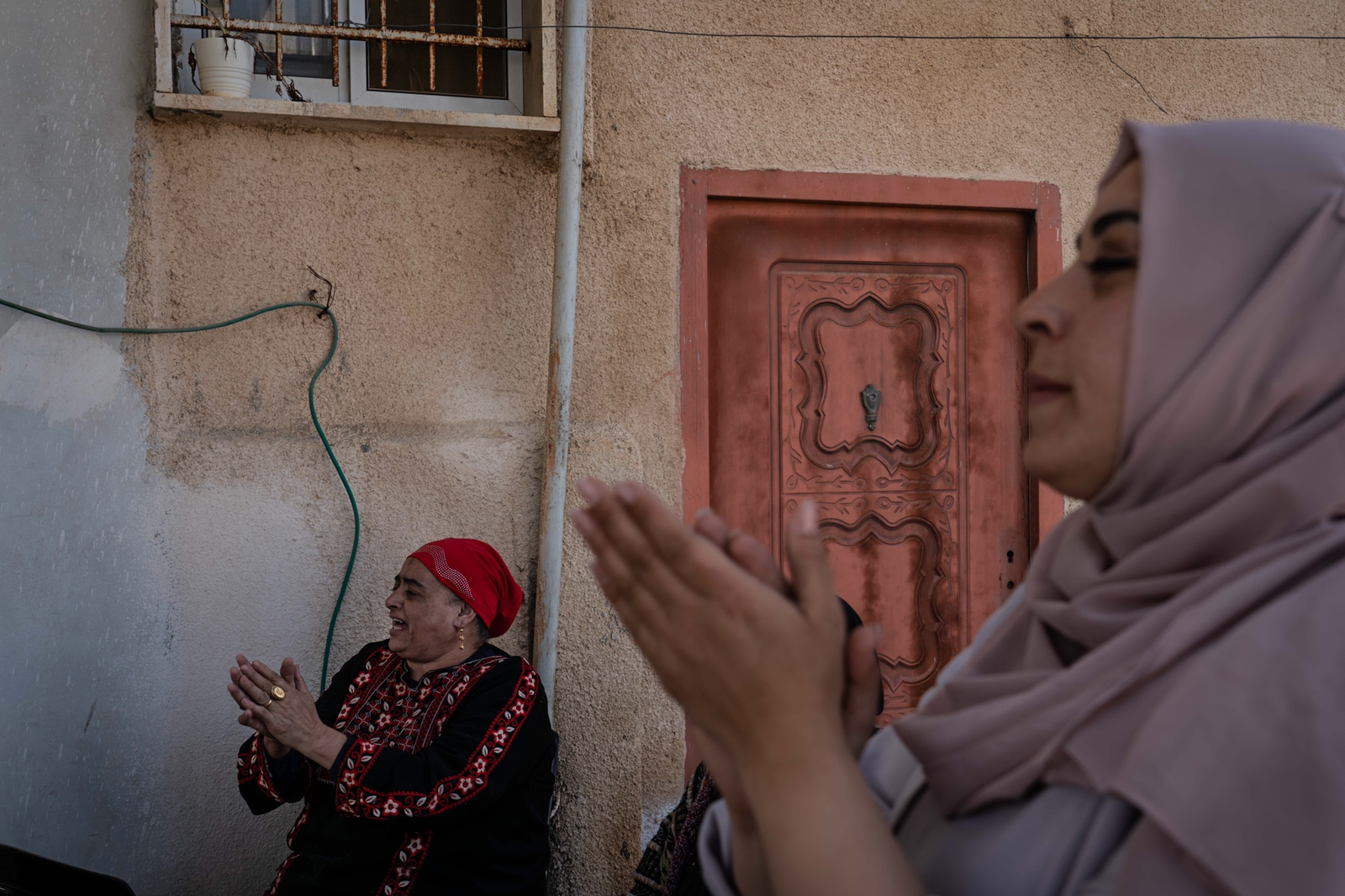
In one of Palestine’s most beautiful villages—known for its organic agriculture and the famous Battiri aubergine—women gather to keep an ancient wedding tradition alive.
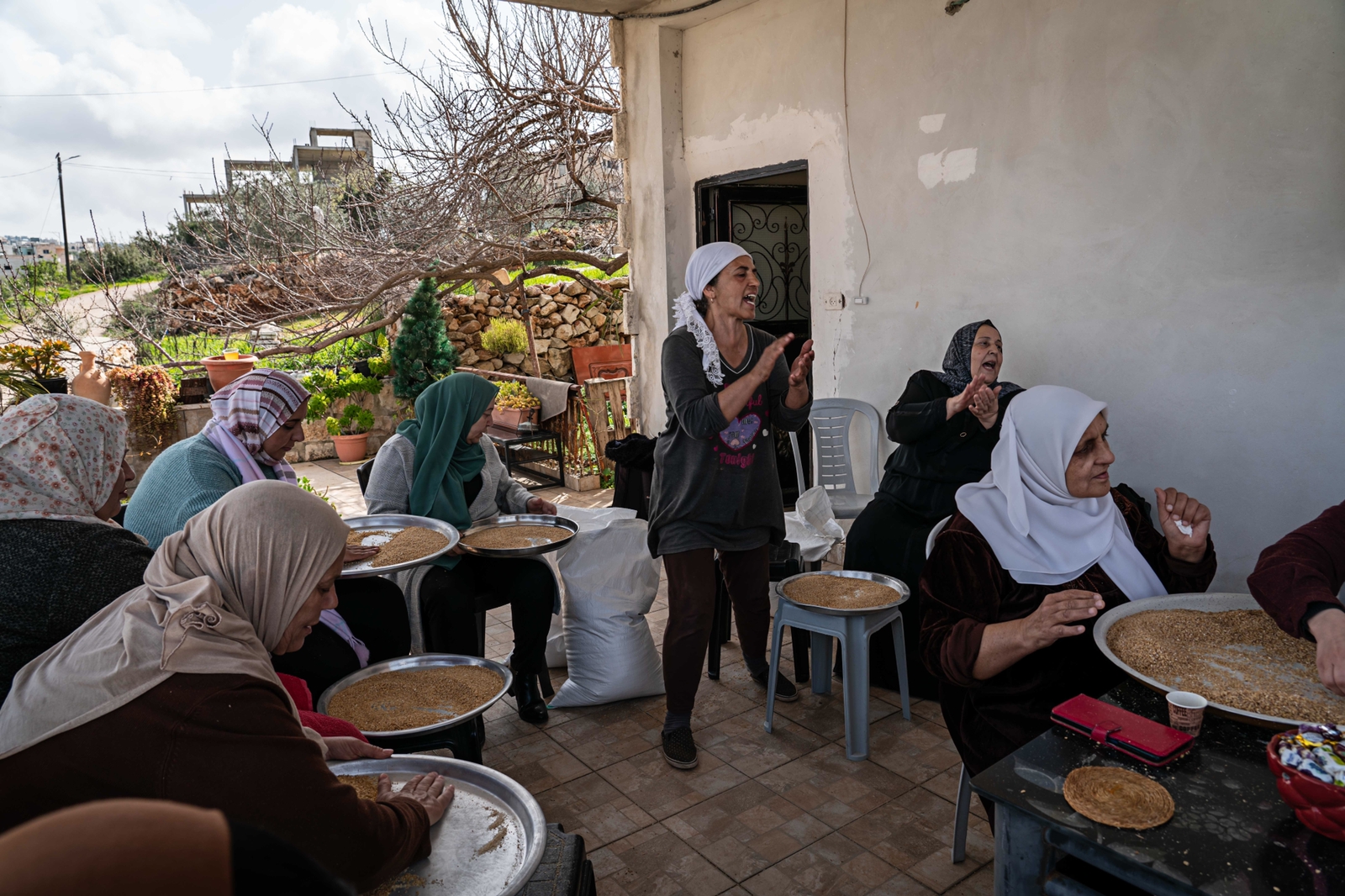
At the groom’s family home, they sit together sifting cracked wheat by hand, carefully removing dirt and stones. As they work, their voices rise in traditional wedding songs, praising the bride and groom and filling the space with rhythm, laughter, and memory.
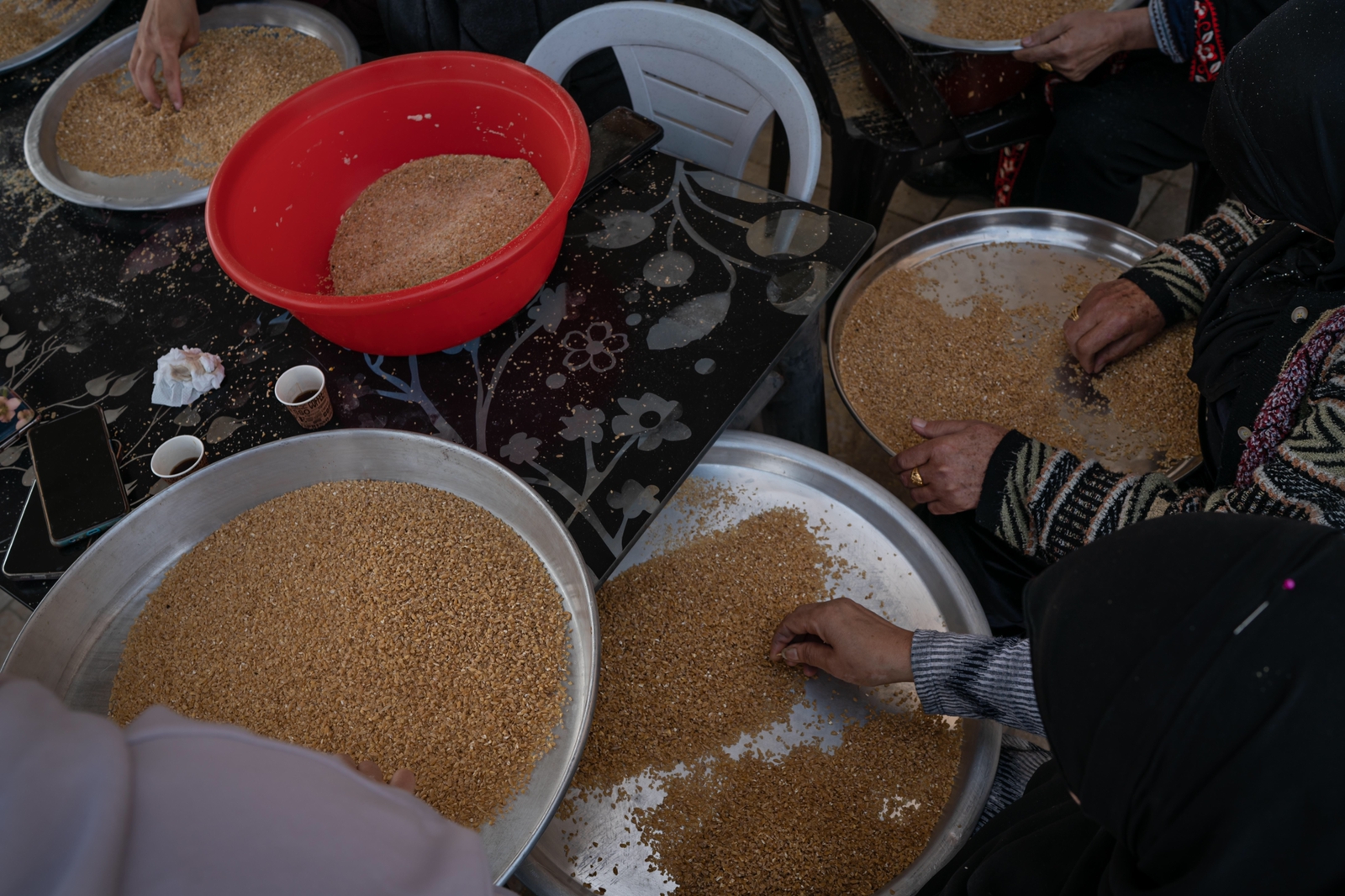
The wheat will later be cooked in a lamb dish prepared for the celebration.
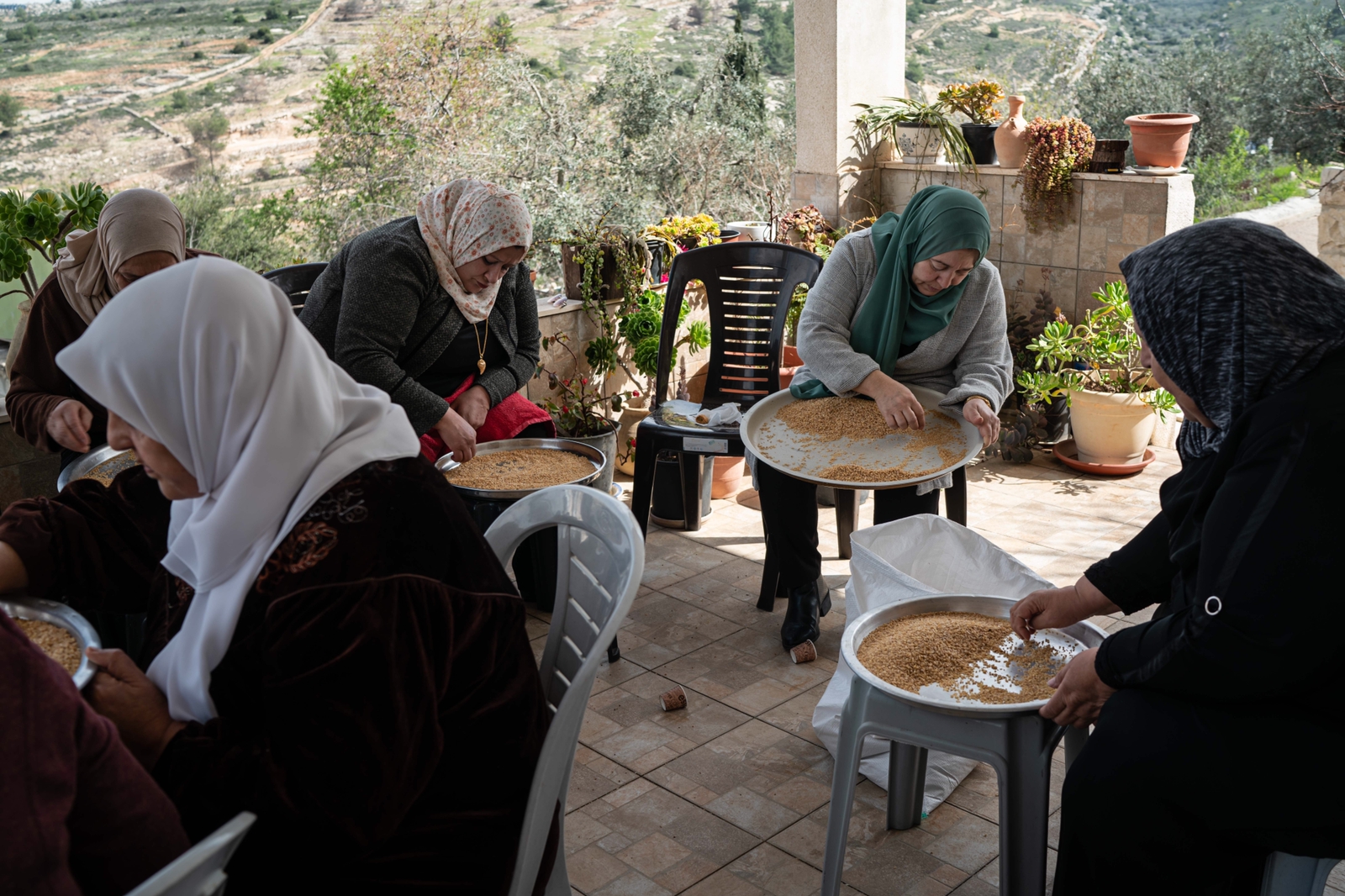
This ritual is more than food preparation. It is a social gathering, a shared labor, and a moment of collective joy led by women. Passed down through generations, it reflects a way of life rooted in cooperation and tradition.
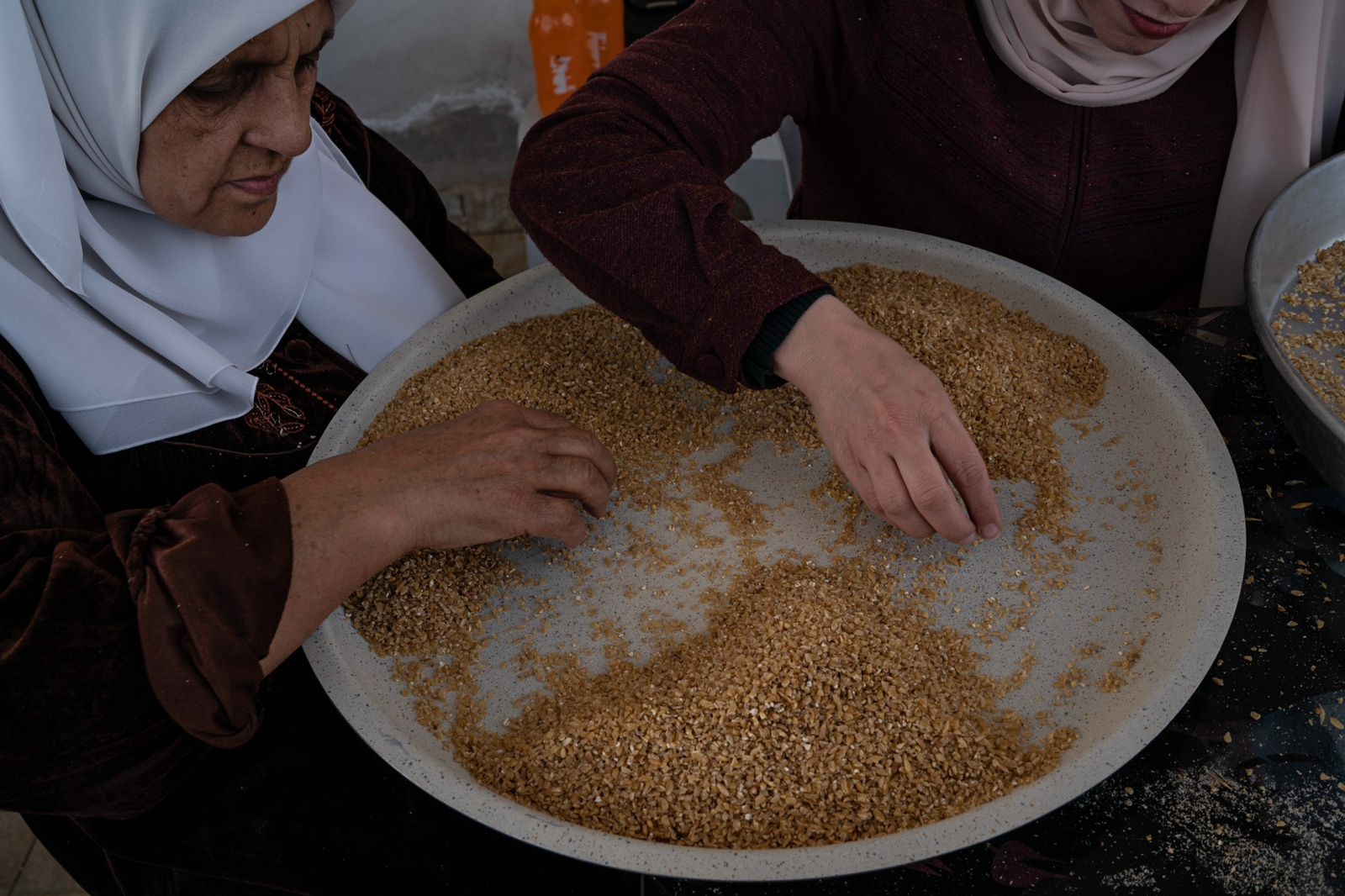
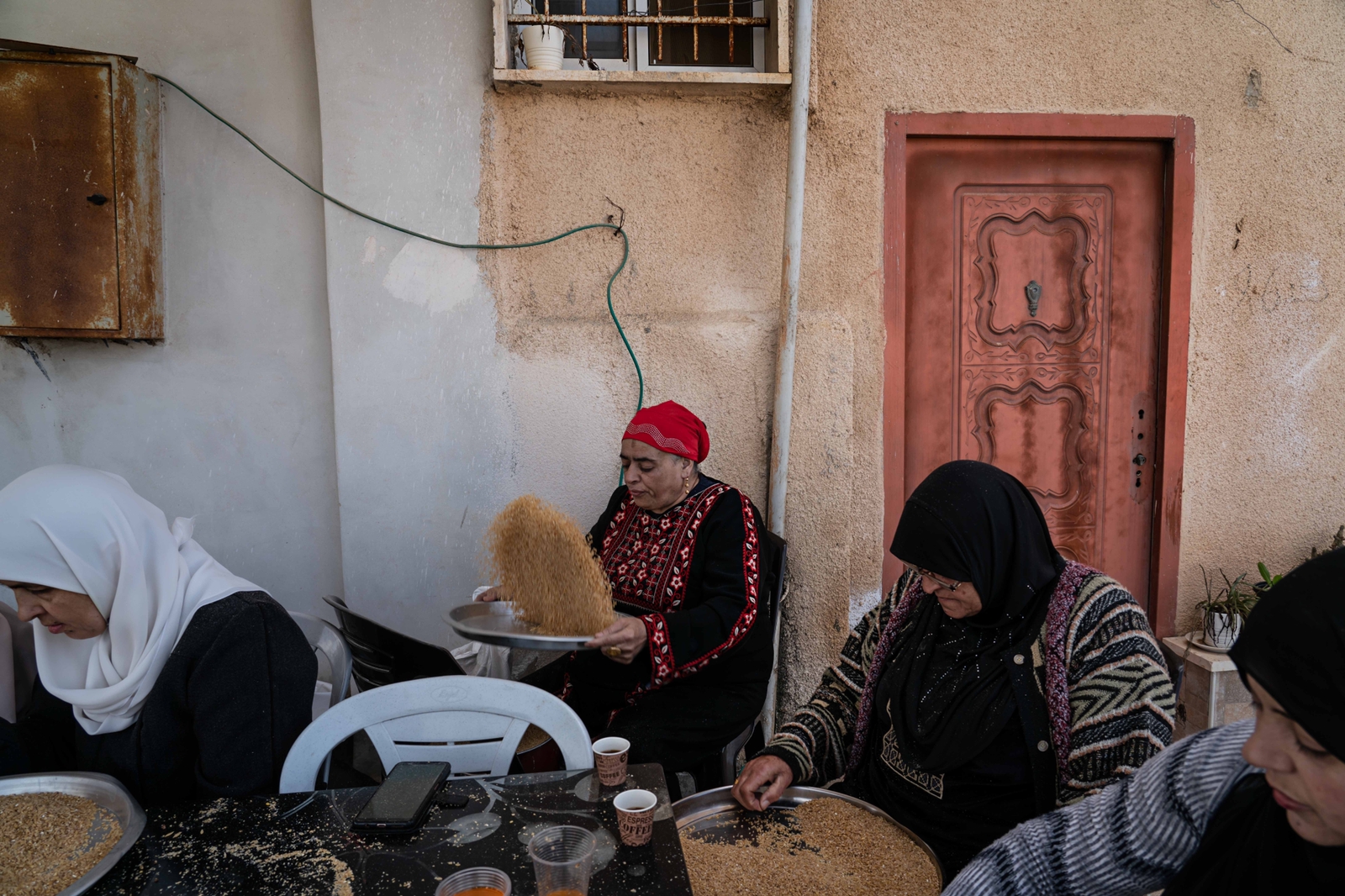
Today, this practice is slowly disappearing. It survives in only a few Palestinian villages, carried by women who continue to sing, sift, and preserve what time threatens to erase.